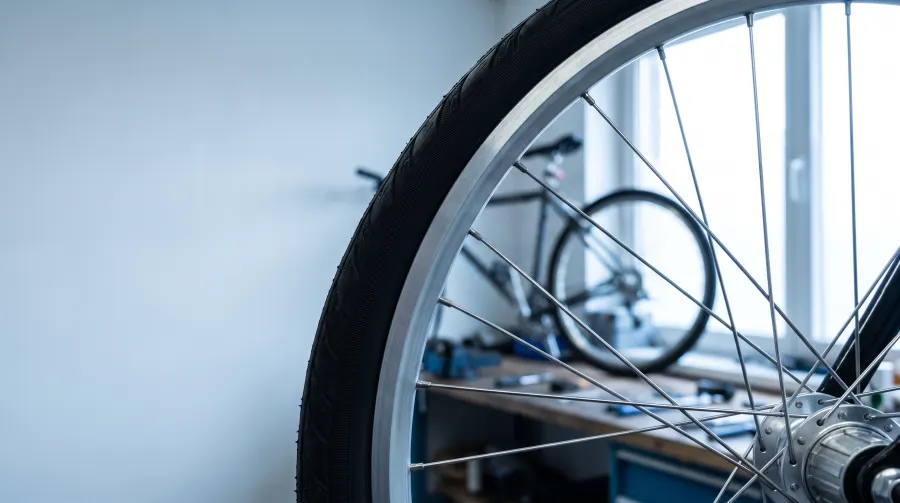
Bike wheels: which features to evaluate?
Before choosing a new wheelset, it is important to consider various technical aspects. Indeed, there is no single ideal wheel for every type of use: different characteristics can offer different advantages depending on the route and riding style.
Rim depth
Rim depth is one of the most noticeable features when comparing bike wheels.
A shallower profile tends to favor lightness and agility, appealing features on climbs and technical routes. A deeper profile can instead offer aerodynamic advantages, especially when riding at sustained speeds on smooth, fast routes.
For this reason, when choosing, it is helpful to find a balance between weight, aerodynamics, stiffness, and conditions of use.
Material: carbon or aluminum?
The rim material helps define weight, stiffness, wheel handling, and price.
Carbon wheels are often chosen for their potential to optimize weight and aerodynamics, as well as for the stiffness they can offer. They are particularly widespread in road cycling and performance-oriented setups.
Aluminum wheels, on the other hand, represent a versatile and generally more accessible solution. They can be an attractive choice for those looking for reliability and practicality in daily use or training.
Hubs and smoothness
The hub is the heart of the wheel and houses the bearings, as well as the freehub engagement system in rear wheels.
Bearing quality, construction precision, sealing, and ease of maintenance are aspects to consider when comparing different models.
Compatibility is also essential: before purchasing, you need to check the axle standard, braking system, freehub body, and number of supported gears.
Wheel weight
Weight is an important parameter, especially when the bicycle is used on routes characterized by frequent accelerations or elevation changes.
However, evaluating only the total weight can be reductive. Mass distribution, inertia, stiffness, and aerodynamic characteristics can also influence the bike's behavior.
For this reason, it is advisable to compare all technical features rather than relying on a single figure.
Road bike wheels
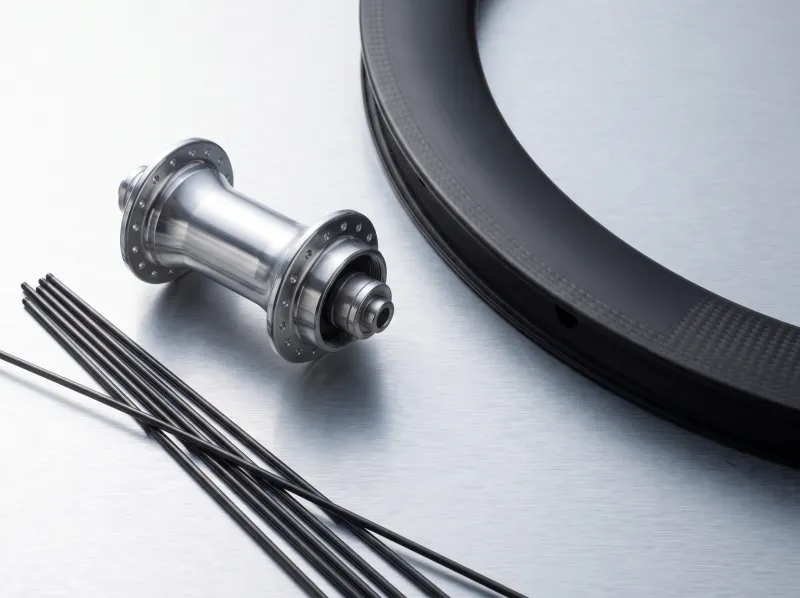
In road cycling, requirements can vary significantly depending on the route.
For climbs and routes with substantial elevation gain, lightweight wheels with a low rim depth can be advantageous. For flat and fast routes, however, a deeper rim depth can offer different aerodynamic characteristics.
For all-round use, it is possible to opt for an intermediate rim depth, seeking a compromise between weight, aerodynamics, stability, and versatility.
The internal rim width must also be compatible with the tires used and the bike's specifications.
MTB wheels: what to consider
In MTB, the choice of wheels depends primarily on the discipline and the terrain.
Cross country, trail, enduro, and downhill require different features. Strength, impact resistance, rim width, and weight must be evaluated in relation to the intended use.
For wider tires, it is generally necessary to choose a rim with compatible dimensional characteristics. The number and type of spokes can also affect the strength and stiffness of the entire assembly.
In MTB, it is therefore important not to necessarily chase minimum weight: for demanding use, reliability and strength can play an equally important role.
Gravel wheels: lightness and versatility

Gravel often requires a balance between on-road performance and the ability to handle rough surfaces.
Gravel wheels must be compatible with larger-volume tires than those typically used on the road and must offer characteristics suited to unpaved riding.
To choose the correct wheelset, it is important to check the internal rim width, tubeless compatibility, wheel diameter, and the type of routes you intend to ride.
Those who alternate between asphalt and gravel can favor a versatile setup; for more technical and rugged routes, it may instead be advisable to prioritize sturdiness and reliability.
Tubeless or inner tube bike wheels?
Another factor to consider is the tire system.
Tubeless wheels allow the use of tires without an inner tube and are particularly common in gravel and MTB, in addition to being increasingly used in road cycling.
Among the aspects to consider are rim compatibility, proper installation, and system maintenance.
Inner tube-compatible wheels can instead offer simpler and more immediate management, especially for those who prioritize practicality and ease of maintenance.
How to compare two wheelsets
When comparing two models, do not stop at the price or the declared weight. Above all, check:
- rim depth and width;
- rim material;
- weight of the pair;
- number and arrangement of spokes;
- type and quality of the hubs;
- compatibility with the frame and fork;
- axle standards;
- braking system;
- tubeless compatibility;
- internal rim width;
- tire compatibility;
- intended use.
Only by considering all these elements is it possible to understand which wheels are truly suitable for your bike.
Which bike wheels to choose?
The choice depends primarily on how you use your bike.
For road bikes, evaluate the balance between weight and aerodynamics based on the route: a shallow rim depth may be suitable when lightness and agility are priorities, while a deeper rim depth may be appealing for those who frequently ride on fast, flat roads.
For MTB, first of all consider discipline, terrain, and required strength. Weight is important, but it must be evaluated together with robustness and reliability.
For gravel, focus on compatibility with wider tires, the option to use a tubeless system, and a balance between lightness and strength.
Find the most suitable wheels for your bike
Choosing the right wheels means starting from the actual use of the bicycle and comparing the technical features that truly make a difference.
Profile, material, weight, hubs, rim width, and compatibility with tires and frame are the fundamental elements to check before purchasing.
Explore the available models and compare specifications to find the bike wheels best suited to your riding style.
How to choose bike wheels in 5 steps
Choosing the right wheels means finding the right balance between performance, weight, strength, and compatibility. To navigate among the many available models, you can follow these 5 simple steps.
1. Choose the type of use
The first element to consider is the type of bike and the terrain you ride on most often.
For a road bike, you can focus on lightness, stiffness, and aerodynamics. For MTB, strength, impact resistance, and features suited to the specific discipline become essential. In gravel, on the other hand, it is important to find a good balance between weight, durability, and versatility.
Starting from the intended use allows you to quickly narrow down your choices and identify the wheels best suited to your needs.
2. Evaluate the material
Carbon and aluminum offer different characteristics.
Carbon wheels are particularly appreciated for the possibilities of optimizing weight, stiffness, and aerodynamics. They are available in various configurations and can be suitable for those seeking high performance.
Aluminum wheels represent a versatile and generally more accessible solution. They can be suitable for training, daily use, and for those looking for a good balance between performance, practicality, and cost.
The choice of material should therefore take into account not only weight, but also the intended use and budget.
3. Choose the rim depth
Rim depth is another important factor.
A shallow profile tends to favor lightness and agility and is particularly advantageous on routes with frequent changes in pace and elevation gain.
A medium rim depth offers a compromise between weight and aerodynamic characteristics and is a versatile solution for different types of routes.
A high rim depth can be appealing for those who frequently ride at sustained speeds and want to place greater importance on aerodynamic efficiency.
There is therefore no universally best rim depth: the choice depends on the type of route and the characteristics you want to prioritize.
4. Check compatibility
Before purchasing a new wheelset, always check that it is compatible with your bicycle.
Check in particular:
- wheel diameter;
- rim width and characteristics;
- axle standard;
- braking system;
- freehub body;
- number of supported gears;
- tire compatibility;
- tubeless readiness, if needed.
A wheel with excellent technical specifications is not suitable for your bike if it does not meet the standards of the frame, fork, and drivetrain.
5. Compare weight and technical specifications
Weight is an important parameter, but it should not be the only selection criterion.
When comparing two wheelsets, also consider stiffness, aerodynamics, number and arrangement of spokes, hub quality, internal rim width, and strength.
For example, a slightly heavier wheel might be more suitable for use that requires greater robustness. Similarly, for a road bike used mainly on fast routes, aerodynamic features might be more important than a small difference in weight.
The right choice starts from the way you ride
There is no single wheel that is perfect for everyone. The ideal setup is the one that combines technical specifications and compatibility with your actual use.
Road, MTB, or gravel? Carbon or aluminum? Low, medium, or high rim depth? Start with these questions, compare the specifications, and choose the wheels best suited to the way you ride.
Carbon or aluminum wheels: which to choose?
When choosing new bike wheels, one of the first questions concerns the rim material: carbon or aluminum?
Both options can be suitable for different types of use. The choice depends mainly on the type of bike, the routes you ride, the characteristics you want to prioritize, and your available budget.
Carbon wheels
Carbon wheels are very common in performance-oriented setups. The material makes it possible to produce rims with specific characteristics in terms of weight, stiffness, and aerodynamics.
They are particularly appealing for those who ride a road bike and are looking for a high-performance setup, but there are also carbon wheels designed for gravel and MTB.
Why choose carbon?
- Ability to keep weight down.
- Ample freedom in designing aerodynamic profiles.
- High stiffness depending on the wheel design.
- Numerous configurations available for road, gravel, and MTB.
- A solution suited to those looking for performance-oriented features.
However, carbon does not automatically mean a “better wheel”: profile, construction, spokes, hubs, and intended use remain fundamental elements to evaluate.
Aluminum wheels
Aluminum is a widely used material in the production of bicycle wheels thanks to its versatility.
Aluminum wheels can be an attractive choice for training, daily use, and for those looking for a good balance between technical features and investment.
Why choose aluminum?
- Good versatility.
- Wide availability of models.
- Usually a more affordable price compared to carbon configurations.
- Suitable for different types of use.
- Available for road bikes, MTB, and gravel.
Even in this case, the material is only one of the elements to consider: weight, rim depth, rim width, hubs, and construction features can vary significantly from one model to another.
Carbon or aluminum: quick comparison
Scroll the table to see all columns →
| Feature | Carbon | Aluminum |
|---|---|---|
| Weight | Can be very low | Generally higher for the same configuration |
| Aerodynamics | Extensive possibilities for optimization | Depends on the rim depth and design |
| Stiffness | Depends on the construction | Depends on the construction |
| Versatility | High | High |
| Price | Generally higher | Generally more affordable |
| Use | Road, gravel, MTB | Road, gravel, MTB |
| Performance | Many performance-oriented configurations | Wide choice for different uses |
Which material to choose?
If you are looking for lightness, aerodynamics, and performance-oriented characteristics, you can consider a carbon wheel.
If instead you are looking for versatility, practicality, and a lower investment, aluminum can represent an interesting solution.
In both cases, before choosing, it is important to consider the actual use of the bike and verify all the technical specifications of the wheel.
Compare the carbon and aluminum wheels available on Titano Sport and find the model best suited to your bike.
FAQ about bike wheels
What are the best wheels for a road bike?
The choice depends on the type of route and the features you want to prioritize. For routes with a lot of climbing, lightweight wheels with a shallow rim depth can be interesting, while for fast and flat routes deeper rim depths can be considered, with a particular focus on aerodynamics.
Are carbon or aluminum wheels better?
There is no single choice that works for everyone. Carbon wheels can offer interesting features in terms of weight, stiffness, and aerodynamics, while aluminum ones are a versatile and generally more affordable solution. The choice should be made considering usage, technical specifications, and budget.
How much does bicycle wheel weight matter?
Weight is an important parameter, especially on routes with frequent accelerations and elevation changes. However, it should not be the only element to consider: stiffness, aerodynamics, inertia, hubs, and weight distribution can also influence wheel behavior.
Which rim depth should you choose for bike wheels?
A shallow rim depth can favor lightness and agility, while a deeper rim depth can offer aerodynamic advantages at sustained speeds. A medium rim depth represents a versatile solution for those seeking a compromise between different characteristics.
Which wheels should you choose for gravel?
For gravel, it is important to evaluate strength, weight, internal rim width, and compatibility with higher-volume tires. tubeless readiness can be an additional factor to consider, especially for those who frequently ride on gravel and mixed terrain.
Which wheels should you choose for MTB?
The choice depends on the discipline and the type of terrain. Cross country, trail, enduro, and downhill may require different characteristics. In particular, it is important to evaluate the balance between weight, strength, rim width, and reliability.
How do I know if the wheels are compatible with my bike?
Before purchasing, it is necessary to check several parameters, including wheel diameter, axle standard, braking system, freehub body, number of supported gears, and tire compatibility. If in doubt, it is advisable to check the model's technical specifications.
Are tubeless wheels better?
The tubeless system offers specific features and can be particularly advantageous for MTB and gravel, as well as becoming increasingly widespread on the road. However, it is not necessarily the ideal solution for every cyclist: you need to check compatibility between rim and tire and also consider your own usage and maintenance needs.
How much does a good set of bike wheels cost?
The price can vary significantly depending on material, weight, rim depth, hubs, construction technology, and intended use. To properly compare two models, it is therefore helpful to evaluate the complete set of technical specifications, not just the price.
Find the right wheels for your bike
Now you know the main factors to evaluate: material, rim depth, weight, hubs, compatibility, and intended use.
Discover the bike wheels available on Titano Sport and compare models to find the configuration best suited to your riding style.
Discover all bike wheels →